
Find emulsions by browsing the list below. This Anthotype database of emulsions will grow each year on Anthotype Day when artists add to the knowledge-bank. It can be used for free, but if you can, please support this resource by becoming a supporting member. Much appreciated!
Emulsions 2022 | 2023 | 2024 | 2025 | List of ALL emulsions ever
Anthotype emulsions A-Z from 2026
Açaí (Euterpe oleracea) anthotype by Narmada Sugasti
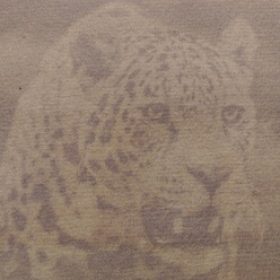
“Onça de Açaí” (Açaí Jaguar) by Narmada Sugasti, Planaltina, Goiás, Brasil
Parts used: Frozen pulp
Amount: 2 tablespoons
Extracted by: Grinding
Solvent: Medium concentration (15%), consisting of 15% concentrated açaí pulp and 85% water. It comes ready-made from the food industry and is known locally as “açaí médio” (medium açaí). No additional solvent was used.
Application: Brushing
Achiote (Bixa orellana) anthotype by Mary Beth Klauer

“In the Garden” by Mary Beth Klauer, Sioux City, Iowa, USA
Parts used: Powder from ground-up seeds
Amount: 2 tablespoons
Extracted by: Mortar
Solvent: Tap water and a small amount of alcohol
Application: Brushing
Alumroot (Heuchera) anthotype by Malin Fabbri
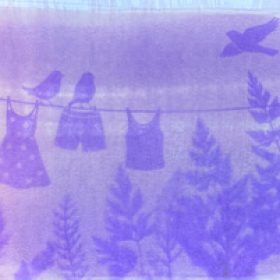
“A Clothes Encounter with Birds” by Malin Fabbri, Stockholm, Sweden
Parts used: Leaves
Amount: 10 leaves
Extracted by: Mortar
Solvent: 3 tablespoons of alcohol (isopropyl)
Application: Brushing
Alumroot (Heuchera) anthotype by Tanya MacGillivray
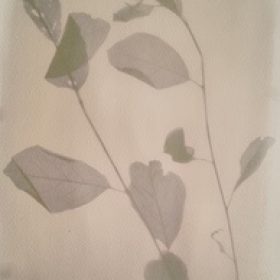
“Alder branch” by Tanya MacGillivray, Halifax, Canada
Parts used: Leaves
Amount: 5 medium-large leaves
Extracted by: Cutting and soaking for several hours
Solvent: 4-5 tablespoons of isopropyl alcohol
Application: Brushing
Avocado (Persea americana) anthotype by Arindam Majumdar
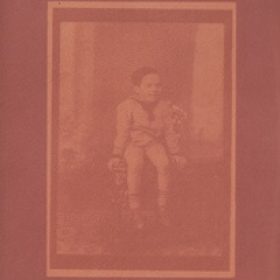
“The Father as a Boy” by Arindam Majumdar, Indianapolis, Indiana, USA
Parts used: Skin
Amount: The skin of 20 (!) avocados
Extracted by: Soak in water overnight, then boil avocado skins for an hour, then filter with a cloth
Solvent: Tap water
Application: Laying watercolour paper on a tray of avocado extract overnight to saturate
Basil (Ocimum basilicum) anthotype by Shannon Beatty
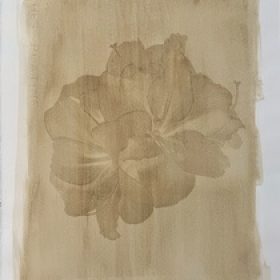
“Hippeastrum” by Shannon Beatty, Frederick, Maryland, USA
Parts used: Leaves
Amount: A generous handful for each print
Extracted by: Macerating in a laboratory blender and filtering through cheesecloth
Solvent: ~10 ml of 91% isopropyl alcohol per print
Application: Brushing with a foam brush
Blueberry (Vaccinium sect. cyanococcus) anthotype by Elaine Lauzon
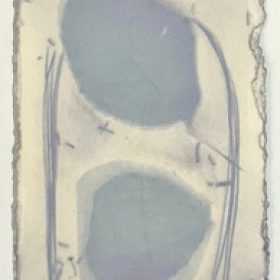
“Blue Rose” by Elaine Lauzon, Hamilton, Ontario, Canada
Parts used: Whole, frozen blueberries
Amount: 1 cup of frozen blueberries
Extracted by: Mortar
Solvent: Isopropyl Alcohol 99%, 2 teaspoons
Application: Brushed on after straining with cheesecloth
Bottlebrush (Melaleuca citrina) anthotype by Ariya Martin and Hazel Landaverde
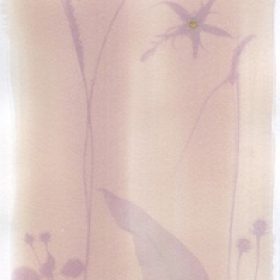
“Untitled” by Ariya Martin and Hazel Landaverde, New Orleans, Louisiana, USA
Parts used: Petals
Amount: A total volume per print was tablespoon
Extracted by: Crushing with a spoon
Solvent: 91% Isopropyl alcohol
Application: Brushing
Broccoli (Brassica oleracea var. itálica Plenk) anthotype by Carla Rocha

“Fractal” by Carla Rocha, Seixal, Portugal
Parts used: Florets (the green heads at the top)
Amount: 5 small florets
Extracted by: Immersion blender
Thinner: Diluted with two spoonfuls of alcohol
Application: Brushing
Brown roll-rim fungus (Paxillus involutus) anthotype by Paul Ligas
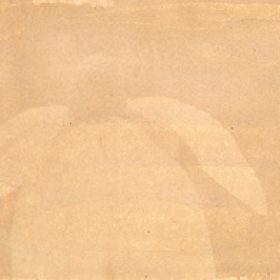
“Yellow Flower” by Paul Ligas, Herefordshire, UK
Parts used: Fruiting body of mushroom, already squished on the lawn
Amount: A handful
Extracted by: Mortar and pestle
Solvent: Isopropyl alcohol, just over 1 teaspoon
Application: Brushing
Buckthorn, alder (Frangula alnus) anthotype by Adley Rochelle
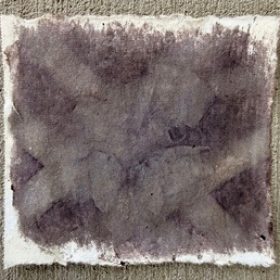
“Fading” by Adley Rochelle, Severance, Colorado, USA
Parts used: Berries
Amount: 1/2 cup
Extracted by: Mortar
Solvent: Tap water
Application: Placed the mash in a coffee filter and lightly rubbed it onto the paper
Bunchberry, Canadian (Cornus canadensis) anthotype by Lisa Locke
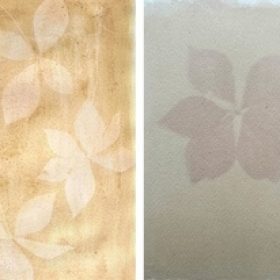
“Bunchberry: Two Responses to Light” by Lisa Locke, Conception Bay South, Newfoundland and Labrador, Canada
Parts used: Bunchberries (fruit)
Amount: ½ cup of bunchberries for the primary experiment; ¼ cup for the comparative alcohol extraction.
Extracted by: I made two emulsions. Cooking in a slow cooker for approximately 2 hours with vinegar and salt. A separate extraction using 99% alcohol was carried out over 24 hours
Solvent: Primary extraction: ½ cup water, 1 teaspoon 10% cleaning vinegar and ½ teaspoon salt. Comparative extraction: ¼ cup 99% alcohol with ¼ cup bunchberries
Application: Brushed onto paper
Bur chervil (Anthriscus caucalis) anthotype by Amy Mickelson
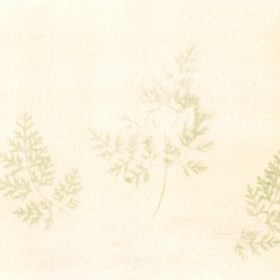
“Bur Chervil Leaves” by Amy Mickelson, Spokane, Washington, USA
Parts used: Leaves
Amount: Approximately ½ cup leaves
Extracted by: Immersion blender
Solvent: 6 teaspoons of 91% isopropyl alcohol
Application: Foam brush
Camellia, Japanese (Camellia japonica) anthotype by Ana Hernández
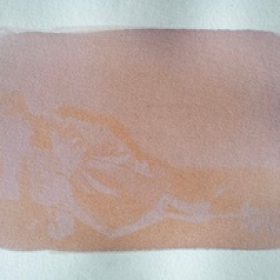
“Japanese Camellia” by Ana Hernández, Louisiana, USA
Parts used: Flower
Amount: 3 medium-sized flowers
Extracted by: Soaking for 10 months
Solvent: 91% isopropyl alcohol
Application: Brushing
Canna (Canna indica) anthotype by Jane Linders

“Dragonfly” by Jane Linders, St. Louis, Missouri, USA
Parts used: Petals
Amount: Two complete blooms
Extracted by: Mortar
Solvent: I added 10 mL of 91% isopropyl alcohol and 2 mL of deionised water to two crushed and pulverised red canna blooms
Application: Brushing
Cannonball tree (Couroupita guianensis) anthotype by Rajeev Peethambaran
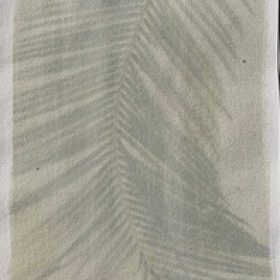
“Tropical Reminiscence” by Rajeev Peethambaran, Kerala, India
Parts used: Petals
Amount: 13 grams of petals
Extracted by: Mortar
Solvent: Alcohol (vodka)
Application: Brushing
Catnip (Nepeta cataria) anthotype by Rhonda Lee Usipiuk
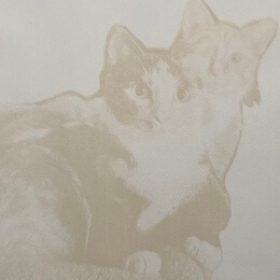
“The Catnippers” by Rhonda Lee Usipiuk, Victoria, British Columbia, Canada
Parts used: Leaves
Amount: 5-6 leaves
Extracted by: Tearing, snipping with scissors, and grinding with a mortar and pestle
Thinner: Three full tablespoons of vodka
Application: Brushing with a foam brush
Chicken of the woods mushroom (Laetiporus sulphureus) anthotype by Kazimierz Biernat
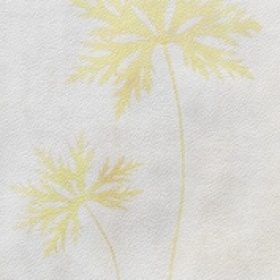
“The World is a Mycelium” by Kazimierz Biernat, Wola Batorska, Poland
Parts used: The young fungal fruit body
Amount: 20 grams
Extracted by: I poured 100 mL of isopropyl alcohol over the sliced mushroom, then let it sit overnight before blending it and straining the mixture through a sock
Solvent: Isopropyl alcohol
Application: Brushing with a foam brush
Chokeberry, black (Aronia melanocarpa) anthotype by Bernd Hutschenreuther
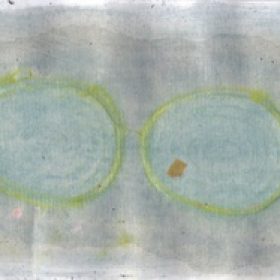
“Onion-Ring Glasses” by Bernd Hutschenreuther, Dresden, Germany
Parts used: Berries
Amount: 15 berries
Extracted by: Pressing with a spoon
Solvent: Tap water, 2 mL
Application: Brushing
Chokeberry, black (Aronia melanocarpa) anthotype by Clive Pigott
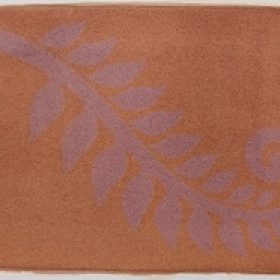
“Unfurling” by Clive Pigott, Wellington, New Zealand
Parts used: Dried berries
Amount: 3 grams
Extracted by: Soaked in water for 4 days to rehydrate
Solvent: Tap water
Application: Brushing
Chokeberry, black (Aronia melanocarpa) anthotype by Ronald D. Butler

“Fire Island Breeze” by Ronald D. Butler, Saltaire, Fire Island, New York, USA
Parts used: Berries
Amount: A small handful
Extracted by: Food processor
Solvent: Everclear whole grain alcohol
Application: Brushing
Chokeberry, Michurin’s (х Sorbaronia mitschurinii) anthotype by Oksana Shatalova and Andrey Shatalov
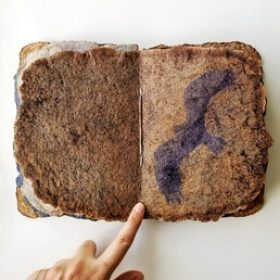
“Harrier” by Oksana Shatalova and Andrey Shatalov, Rudny (Kostanay region), Kazakhstan
Parts used: Berries
Amount: A handful
Extracted by: Trituration in a mortar
Solvent: Tap water and ethyl alcohol
Application: Brushing
Cleavers (Galium aparine) anthotype by Hazel Landaverde
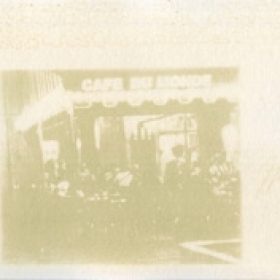
“Café – Oh You Know the One” by Hazel Landaverde, New Orleans, Louisiana, USA
Parts used: Stems and leaves
Amount: A few tablespoons
Extracted by: Blender
Solvent: Cleavers mixed with 91% isopropyl alcohol
Application: Foam brush. I coated paper in March of 2026, but printed in October
Clematis (Clematis × jackmanii) and Pomegranate (Punica granatum) anthotype by Karin Matter-Locher
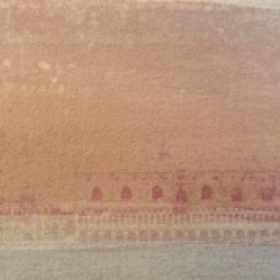
“A Memory of Venice” by Karin Matter-Locher, Murten, Switzerland
Parts used: Petals from both plants
Amount: A handful for two prints
Extracted by: Cut into small pieces with scissors, then alcohol (38% ethanol, 62% distilled water)
Application: Sponge
Coffee (Coffea) anthotype by Kathleen Bishop
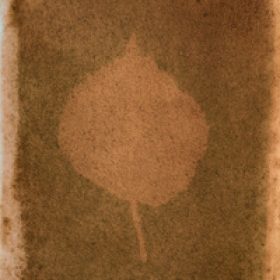
“Fall Leaf #4” by Kathleen Bishop, Santa Fe, New Mexico, USA
Parts used: Folger’s Instant coffee granules
Amount: A few spoonfuls
Extracted by: Stirring until dissolved
Solvent: A cup of tap water
Application: Brushing
Coffeeberry (Frangula californica) anthotype by Anna-Brit Schlaepfer

“Coffeeberry” by Anna-Brit Schlaepfer, San Francisco Bay Area, California, USA
Parts used: Berry skins
Amount: ~10 berries
Extracted by: Soaking and mashing
Solvent: Isopropyl alcohol 91%
Application: Brushing
Collard green (Brassica oleracea) anthotype by Nathalia Dov
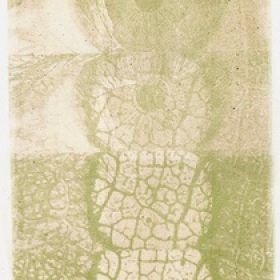
“Self-portrait” by Nathalia Dov, Florianópolis, Santa Catarina, Brasil
Parts used: Leaves
Amount: 4 big leaves
Extracted by: Blender
Solvent: Tap water and alcohol
Application: Brushing
Cornelian cherry (Cornus mas) anthotype by Goran Budija

“Photogenic drawing 1/2026” by Goran Budija, Zagreb, Croatia
Parts used: Berries
Amount: A handful of berries
Extracted by: Soaking in 200 mL cheap vodka for 10 days, then ultrasonically treated for 10 minutes (60 w/40 khz)
Solvent: Vodka
Application: Brushing
Cosmos (Cosmos caudatus) anthotype by Ivonne Gutiérrez González
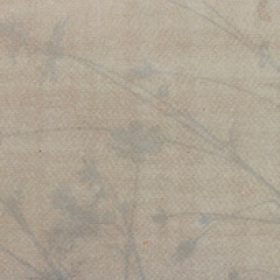
“Similar seeds” by Ivonne Gutiérrez González, Mexico City, Mexico
Parts used: Petals
Amount: 9 grams
Extracted by: Mortar
Solvent: Alcohol (ethanol)
Application: Brushing
Cyclamen, ivy-leaved (Cyclamen hederifolium) anthotype by Ellen J. Craft
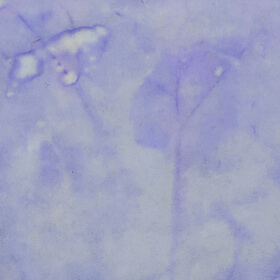
“Purple Haze” by Ellen J. Craft, Seattle, Washington, USA
Parts used: Petals and stems
Amount: Two handfuls per print
Extracted by: Mortar
Solvent: Isopropyl alcohol
Application: Brushing with a foam brush
Dwarf elder (Sambucus ebulus L.) anthotype by Gabriele Coassin
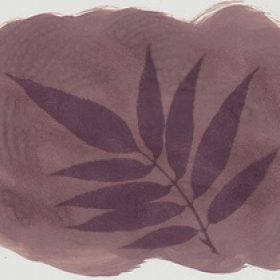
“Ebulus leaves” by Gabriele Coassin, Venetian countryside, Italy
Parts used: Whole berries
Amount: A handful for each A4 print
Extracted by: Wrapped in cotton wool and pressed with a potato masher
Solvent: None
Application: Brushing
Dyer’s coreopsis (Coreopsis tinctoria) anthotype by Fiona Robinson

“Coreopsis ‘self-portrait'” by Fiona Robinson, Salford, Greater Manchester, UK
Parts used: Petals
Amount: A handful for several small prints
Extracted by: Mortar
Solvent: Alcohol (vodka)
Application: Brushing
Eastern red cedar (Juniperus virginiana) anthotype by Kate Heuston
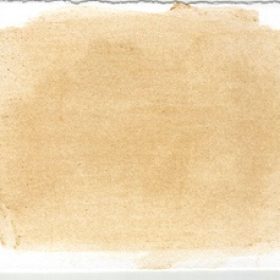
“Treasure” by Kate Heuston, Baltimore, Maryland, USA
Parts used: Berries/seed cones
Amount: 5 berries/seed cones for 1 print
Extracted by: Mortar
Solvent: Alcohol – vodka
Application: Brushing
Elderberry, red (Sambucus racemosa) anthotype by Ambjörn Jansson
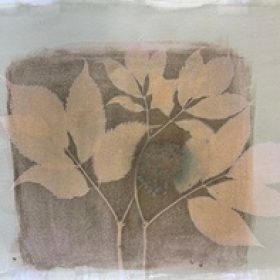
“Druvfläder” by Ambjörn Jansson, Sweden
Parts used: Berries
Amount: A handful (quite a big hand!)
Extracted by: Mortar
Solvent: A tablespoon of alcohol (isopropyl)
Application: Brushing
Eucalyptus (Eucalyptus) anthotype by Dalene Marais
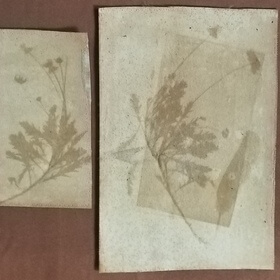
“African Bush Daisy and Dove Feather” by Dalene Marais, Johannesburg, South Africa
Parts used: Bark
Amount: A small bottle
Extracted by: Strips of eucalyptus bark were placed in a small screw-top bottle and soaked for 12 months. The bottle was vigorously shaken to remix the sediment at the bottom. This produced a reddish-brown fluid.
Solvent: Tap water
Application: The canvas was soaked in the bark extract in a container, completely covered by the extract for 18 hours
False shamrock, purple (Oxalis triangularis) anthotype by Tracy Piper-Wright

“Spotlight” by Tracy Piper-Wright, Ellesmere, Shropshire, UK
Parts used: Leaves
Amount: 14 stems (a good handful)
Extracted by: Blender
Solvent: Tap water
Application: Foam brushing
Fig (Ficus carica) anthotype by Montserrat Rodríguez aka nyx10110
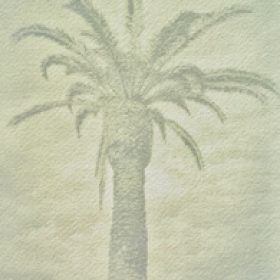
“A palm tree” by Montserrat Rodríguez aka nyx10110, L’Estartit, Catalonia, Spain
Parts used: The skins from figs
Amount: 4 figs to make 3 layers on A5 paper
Extracted by: Pestle, mortar and strainer
Solvent: 10 mL of vodka and a little tap water
Application: Brushing
Fuchsia (Fuchsia magellanica) anthotype by Patricia Bromberger

“Purple Dreams” by Patricia Bromberger, Los Osos, California, USA
Parts used: Petals, both pink and purple
Amount: 24 flowers for each layer
Extracted by: Flowers ground up in a coffee grinder with 30 mL of 91% ethyl alcohol, soaked for 30 minutes, then filtered
Solvent: 91% ethyl alcohol
Application: Brushing with a foam brush
Geranium, red (Pelargonium hortorum) anthotype by Viviane Piccoli

“Untitled” by Viviane Piccoli, Casa Branca, Sao Paolo, Brazil
Parts used: Petals
Quantity: One handful per print, approximately 10 grams
Extracted by: Maceration
Solvent: Tap water and approximately 5 drops of lemon juice
Application: Brushstrokes
Greenbrier, lanceleaf (Smilax smallii) and Greenbrier, bristly (Smilax tamnoides) anthotype by Alan Harvey
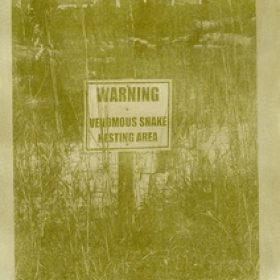
“Snake-protected dune” by Alan Harvey, Tybee Island, Georgia, USA
Parts used: Leaves
Amount: Probably only around 10 grams used for this print (out of a 60-gram batch)
Extracted by: Soaking overnight
Solvent: Isopropyl alcohol
Application: Brushing


 Rated 9,8 - based on 224 votes


 Rated 10 - based on 8 votes

 World Anthotype Day
 World Cyanotype Day


