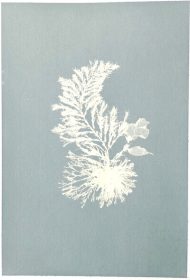
Sustainability in photography

Figure 1. The Ecological Wetroom, working installation and research prototype, 2026.

Following Cyanotype Beyond the Print: Washwater, Waste and Material Responsibility

Cyanotype is often thought to end when the print is washed, dried, and hung on the wall. But what happens to the chemicals washed down the drain? Aindreas Scholz looks beyond the finished cyanotype to examine the washwater and waste. Through The Ecological Wetroom and a series of experiments, workshops and filtration tests, the project makes these usually overlooked by-products visible and asks how to become more aware of what … Read more
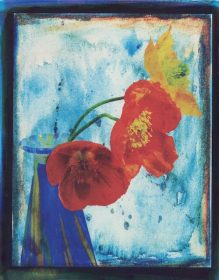
Figure 4. Six Layer (CMYKLCLM) Gum Bichromate Print on Fabriano Artistico Cold Press Paper

A Non-Toxic Gelatin-acrylic Sizing for Gum Bichromate and Other Processes

Gelatin-acrylic sizing provides a reliable, non-toxic alternative to traditional paper sizing for gum bichromate printing. Marek Matusz explains how combining gelatin with acrylic medium improves adhesion, reduces pigment staining, and produces consistent multi-layer prints. He compares several formulas, recommends his preferred mixture, and shows how the sizing also works well for cyanotype, palladium, and gum-over prints. Writer and photography / Marek Matusz WARNING: ADVANCED USERS ONLY: This process requires experience … Read more

Soaking plants for eco printing

Eco-printing: How to Print with Leaves, Rust, and Heat

Eco-printing is not generally defined as an alternative photographic process, but a closely related printing technique. it shares the same spirit of experimentation, natural materials, and handcrafted image-making. It also combines beautifully with processes such as anthotypes, which is why we want to share it. Yulia Kapustynska shares her eco-printing process. Writer and photography / Yulia Kapustynska Eco-printing creates images through direct contact between plants, metal, paper, heat, and time. … Read more

The final vertotype print with subtle tones.

Vertotypes – Eco-printing, based on cyanotypes

During a residency at The Sustainable Darkroom, Pedro Mendes Leal learned Vertotype – a technique discovered by Jonathan Bradley,  similar to cyanotype, but developed with greater environmental awareness. Since then, he has been experimenting with and refining the process and shares what he has learned. Writer and photography / Pedro Mendes Leal Read the SDS (Safety Data Sheet) before attempting to use chemicals and use the correct safety equipment. What … Read more

After 18 hrs

Sustainable Plant Proteins as a Less-toxic Alternative to the Gum-bichromate Process

The ferric-lupin process was developed by Peter Friedrichsen and to some extent the naming follows the convention of gum bichromate (the sensitizer and colloid form part of the name) but instead, utilizing a sustainable plant-based protein. It can be hardened in several ways, here Peter follows the less toxic CHIBA system. Writer and photography / Peter Friedrichsen Read the SDS (Safety Data Sheet) before attempting to use chemicals and use … Read more

Sustainable options

Fill out the survey and contribute to this page, which aims to be a living document and a resource and a page containing a list of more sustainable options for some of the chemicals used in alternative photographic processes. The survey will be open until the end of May. Researched by / Malin Fabbri, Anne Eder and Henri Blommers The survey is now closed. Thank you for taking part. The … Read more

Still from Edd Carrs documentary I am a darkroom with the Sustainable Darkroom initiative

Interview with Edd Carr at the Sustainable Darkroom

Edd Carr, director of the Sustainable Darkroom, explores sustainable photography through alternative processes showcased in a documentary. With a focus on ecological practices, the project educates and inspires, aiming to redefine the environmental impact of traditional photography. Photography / Edd Carr Edd Carr is the director of the Sustainable Darkroom and recently released a documentary on sustainable photography. The documentary was made using a variety of alternative processes including Super … Read more

Dan Hermouet in his "kitchen“

Cooking photography – sustainable alternative photographic processes by Dan Hermouet

Why would an artist be concerned with ways to make photography more sustainable and how could such query transform one’s artistic practice? Curious writer Miglė Markulytė interviews photographer Dan Hermouet to reveal how he cooks photography by distilling pigments from a river, scrubbing off the rust from old tools, and mixing special photo-sensitive solutions with curds. Writer / Miglė Markulytė Photography / Dan Hermouet “A good chef can not only … Read more